FESTIVAL 2026
- Home
- FESTIVAL 2026
FESTIVAL 2026: Beyond Our Bubble
A media bubble isn’t just a digital phenomenon. It’s the way we select information, filter reality, and stop hearing other voices. The 5th edition of the World Between the Lines asked how to practise journalism that challenges assumptions rather than confirming them — and how to notice when our own newsrooms are operating inside a bubble.
WHAT HAPPENED
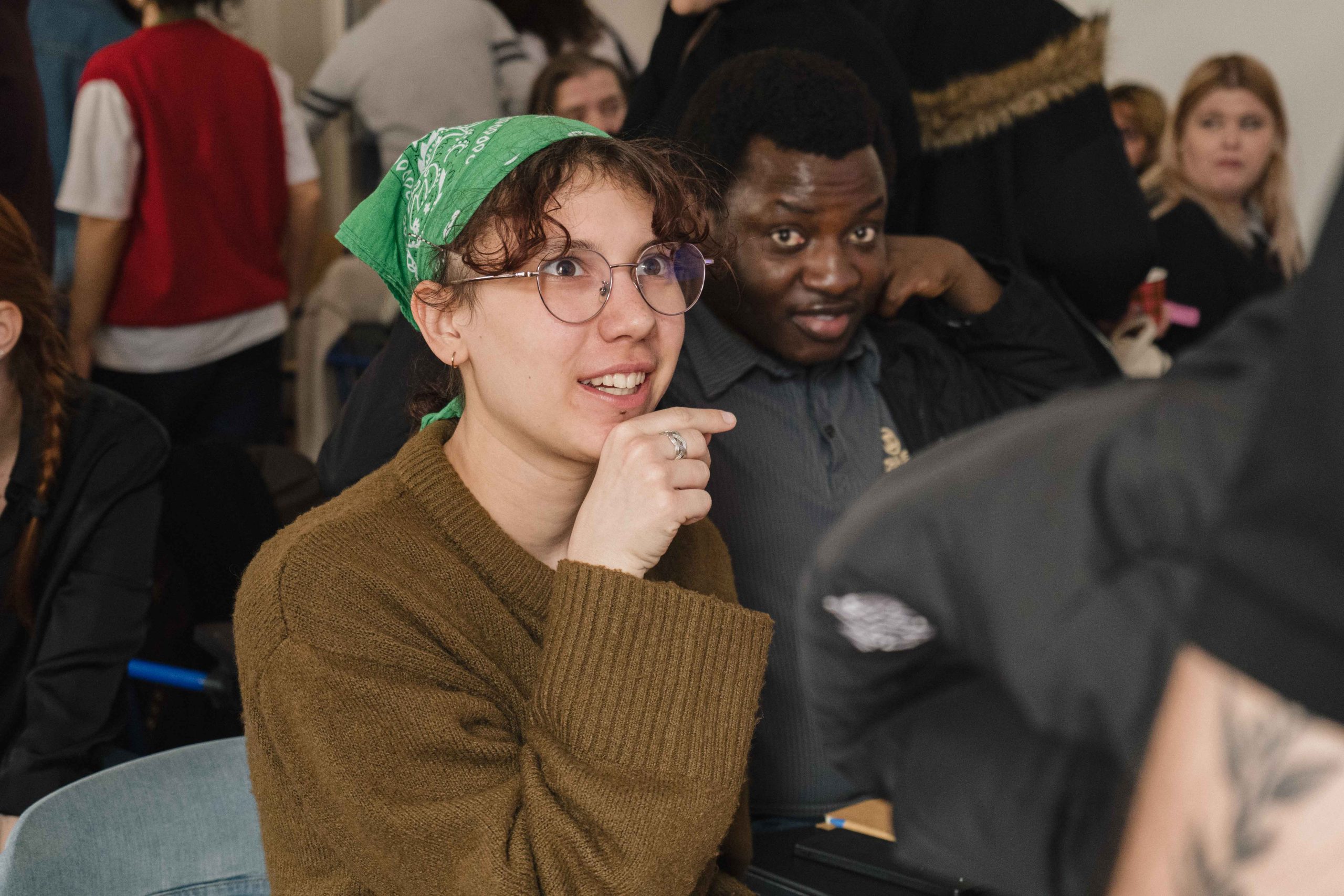
Five days of discussions, workshops, and encounters with journalists from seven countries. We talked about how algorithms shape what we see — and what we miss. How societies fracture into hostile camps and what role the media plays in that. How to document trauma without dehumanising people.
Alongside panel discussions, the programme included intensive hands-on workshops: investigative techniques with Ross Higgins from Bellingcat and Martin Turček from Aktuality.sk, reporting from challenging environments with András Földes, and the craft of reportage with Ludwika Włodek. The programme also featured a disinformation escape room that tested dozens of participants.
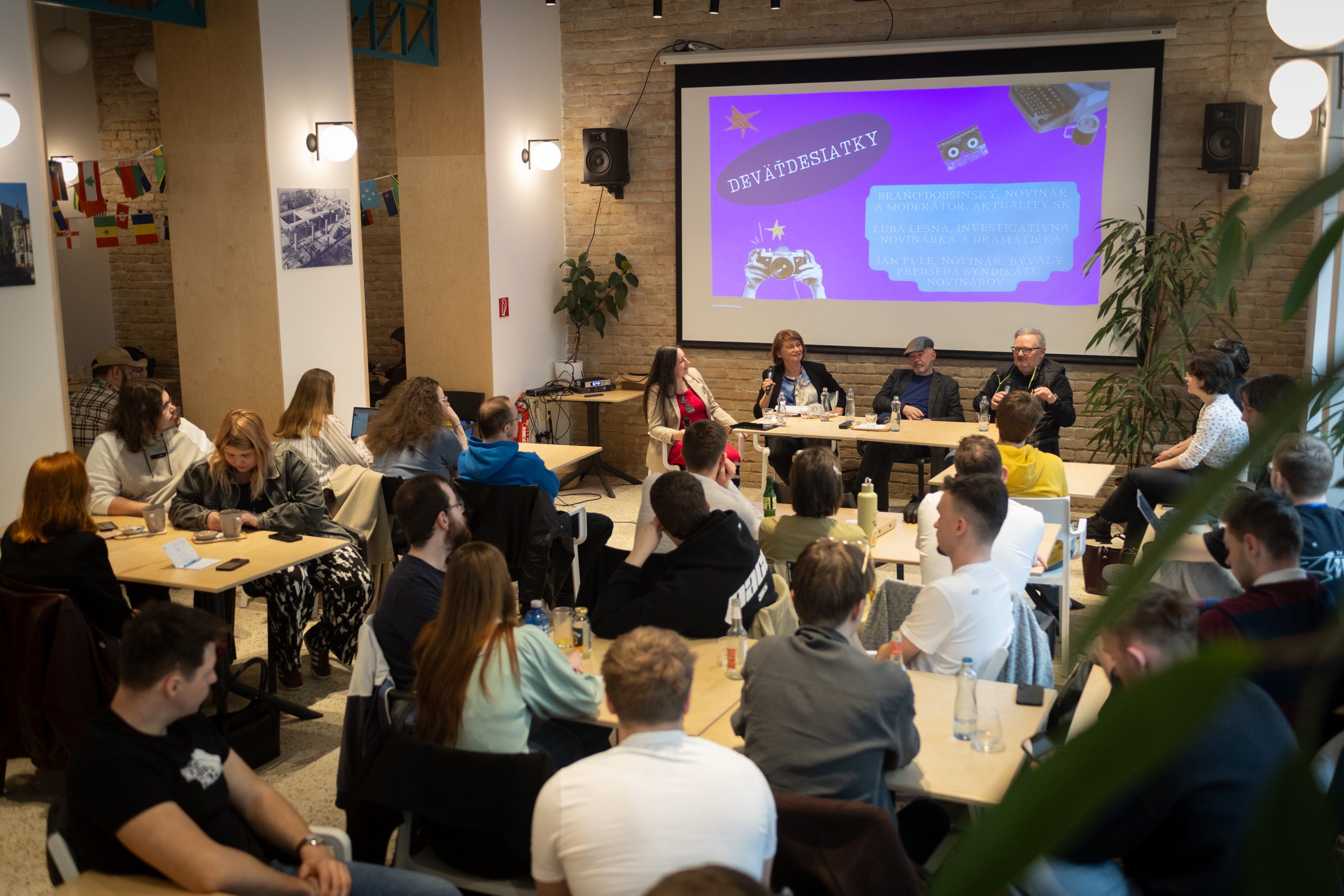
The festival brought generations together: veterans of 1990s journalism met today’s reporters, and it turned out that some things don’t change — they just get new names.
The festival in numbers
MOMENTS THAT STAYED
Media Freedom in V4
A workshop with Peter Hanák that opened the festival by mapping where the warning signs are today — in Poland, Hungary, Czechia, and Slovakia. Legislative attacks disguised as reforms, economic pressure, concentrated ownership. Nothing new — but nothing to get used to either.
Media Bubbles
Jakub Macek showed how algorithms decide what we see — and how they reinforce it. We read the same sources, follow like-minded people, and then can't understand why the other half of society sees the world completely differently.
Defining Moments of Television
Marta Jančkárová, Peter Malec and Jakub Železný looked at how Slovak and Czech television covered August 1968, November 1989, and the dissolution of the state. Journalism in times when a single shot could make a career — or end one.
The Polish School of Reportage
udwika Włodek, Lukáš Onderčanin and Zuzana Kepplová on the craft of turning facts into stories. And on a tradition that has few parallels in European journalism.
Women in Media
Jitka Adamčíková, Apolena Rychlíková and Patrícia Kordiaková on glass ceilings, mansplaining in editorial meetings, and trolls in the comments. Not about individual experiences — about systemic barriers and what to do about them.
Central Europe Through Foreign Eyes
Jolyon Naegele, James Thomson and Mirka Širotníková on what foreign correspondents see when they report on Central Europe — and what we overlook from the inside.
WHO JOINED US
Investigative reporters, fact-checkers, documentary photographers, media researchers, and student newsrooms from seven countries. Journalists who ask uncomfortable questions — even when nobody wants to hear the answers.
Featured participants:
Ludwika Włodek (Gazeta Wyborcza, Poland) · Barbara Matejčić (The Guardian / Balkan Insight, Croatia) · Jolyon Naegele (USA) · András Földes (HVG, Hungary) · Ross Higgins (Bellingcat, UK) · Apolena Rychlíková (Page Not Found, Czech Republic) · Karol Grygoruk (RATS, Poland) · Jakub Macek (Masaryk University, Czech Republic)
+ 30 more journalists, photographers, and media experts
Also joined by:
Also at the festival: Ľuba Lesná · Branislav Dobšinský · Ján Füle · Anna Sámelová · Marta Jančkárová · Peter Malec · Jakub Železný · Ľubomír Bajaník · Jakub Šrol · Barbara Lášticová · Jitka Adamčíková · Patrícia Kordiaková · Renáta Sedláková · Jana Čavojská · Zuzana Kepplová · Lukáš Onderčanin · Martin Turček · Peter Hanák · James Thomson · Mirka Širotníková · Eszter Neuberger · Jakub Goda · Martin Hodas · Eva Mihočková · Lucia Virostková · Magdalena Rojo · Zuzana Kozárová · Peter Ivanič